
Blog
Are Digital Locks Safe? 8 Security Features That Actually Matter

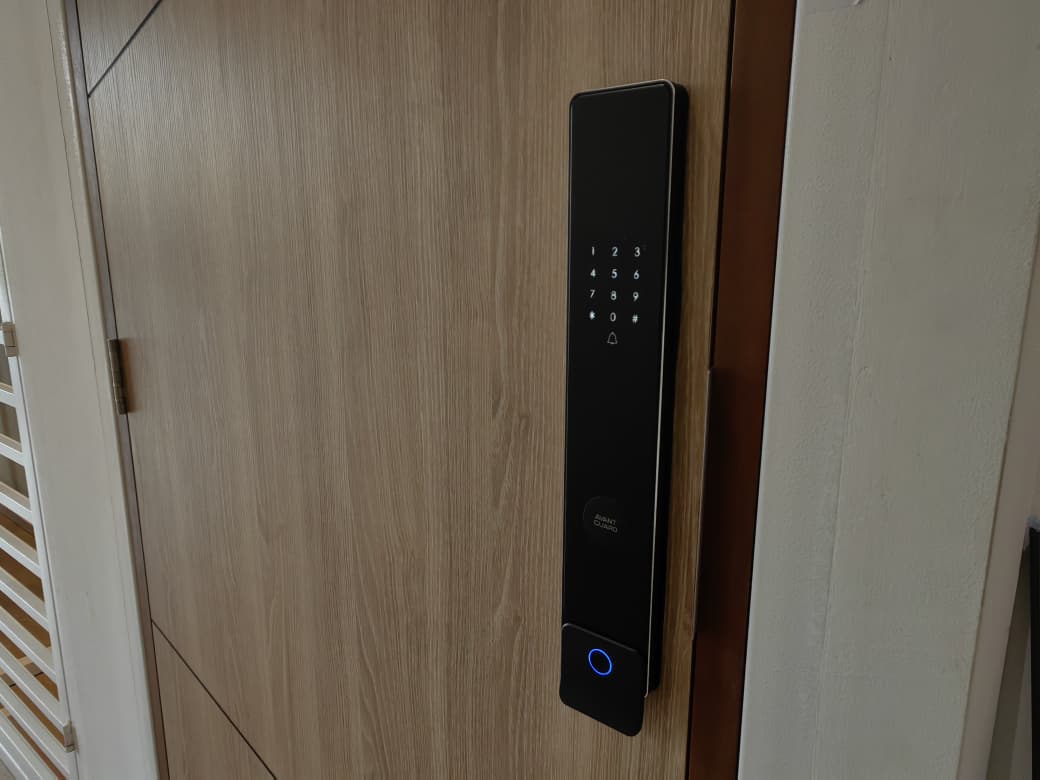
Digital locks are now standard in new Malaysian condos, yet many homeowners still ask: can it be hacked, can it be forced, is it really safer than a key? The honest answer is that a good digital lock is safer than a typical keyed lock, and a cheap one can be worse. The difference is in eight features. Here is what each one does and how to check for it.
What burglars actually do
Most break-ins are not high-tech. Intruders look for doors left unlocked, keys under the mat, weak grilles and locks that can be pried or picked quickly. A digital lock already removes the two biggest risks, lost or copied keys and doors left unlocked, before you count any of the features below.
1. Auto-locking
The single most useful security feature. A fully automatic lock throws its bolt the moment the door closes, so the door is never left on the latch. Semi-automatic locks lock when you lift the handle.
2. A strong mortise and cylinder
The electronics are only as strong as the metal behind them. Check that the mortise (the lock body inside the door) is 304 stainless steel, which all Avant Guard mortises are, and ask for the lock cylinder grade. C-grade cylinders are the higher grade against picking; most of our locks use C-grade, with B+ on some entry models.
3. Anti-pry (tamper) alarm
If someone tries to lever the panel off the door, the lock sounds a loud alarm. On connected models you also get an alert on your phone.
4. Lock-out after wrong attempts
Repeated wrong fingerprints, PINs or cards trigger a continuous-failure alarm and temporarily freeze the keypad, which stops anyone guessing codes.
5. Virtual (anti-peep) password
You can type random digits before and after your real PIN, and the lock still opens. Anyone watching, or reading fingerprint smudges on the screen, cannot work out your code.
6. Hijack (duress) alarm
Set a special fingerprint or code to use only if someone forces you to open the door. The door opens normally, but the lock silently sends an alert to family on the app.
7. Biometrics that are hard to fake
Fingerprint readers are good; palm vein is better. It reads the pattern of blood vessels under the skin, which cannot be lifted from a glass or copied from a photo. Face recognition with depth sensing adds a hands-free option. Both are available on locks like the S50 and S41 and the P41 and P23.
8. Offline operation (the hacking question)
Any device connected to the internet has an online attack surface. A lock that works fully offline keeps its core function local: your fingerprint is checked inside the lock, not on a server. Avant Guard’s Bluetooth models run on LOCAMESH™, our offline Bluetooth mesh with no cloud dependency. Every lock we sell also keeps working when the internet is down. If you do use remote access, protect the app account with a strong password and do not share the admin login.
What no lock can fix
- A weak door or frame. A strong lock on a hollow door or a loose frame is still the weak point. Fit main-door locks on solid, fire-rated or security doors.
- Poor installation. A misaligned bolt that only half-enters the strike plate defeats every feature above. Use a trained installer.
- Shared codes left active. Use temporary passwords for cleaners and contractors, and review the entry log.
Certifications and track record
Ask the brand about certification and local support. Avant Guard’s S11 smart lock is MCMC certified, our products carry a 2-year warranty, and in 2025 we won four awards at the inaugural Atap Product Design Awards (APDA), including Platinum Recognition for Best Smart Home & Security Innovation.
Security checklist
- Auto-lock (fully auto or semi-auto with reminder)
- 304 stainless steel mortise, C-grade cylinder
- Anti-pry alarm
- Lock-out after wrong attempts
- Virtual password
- Hijack alarm
- Palm vein or face ID if you want the strongest biometrics
- Works offline
Ready to choose? Start with our digital door lock buyer’s guide.
Frequently asked questions
Can a digital door lock be hacked?
Any internet-connected device carries some online risk. Locks that work fully offline, such as Avant Guard Bluetooth models on LOCAMESH™, check your fingerprint or PIN inside the lock rather than on a server. Use a strong app password if you enable remote access.
Is a digital lock safer than a normal key lock?
A well-made, well-installed digital lock is generally safer: it auto-locks, cannot be opened with a copied key, alarms when tampered with and logs every entry. Cheap locks with weak mortises can be worse.
What is a hijack alarm on a digital lock?
A special fingerprint or code you use only under threat. The door opens normally but the lock silently alerts your family on the app.
Is palm vein better than fingerprint?
Palm vein reads blood vessel patterns under the skin, which cannot be lifted from surfaces or photos, so it is harder to fake than a fingerprint and works with wet or worn fingertips.
See it before you buy. Try every lock and light at our showroom in SPHERE Damansara, Petaling Jaya (Mon–Fri 9am–6pm, Sat–Sun 10am–5pm), or WhatsApp us a photo of your door at 014-338 6654 and we will recommend the right model.